
What COVERE² Took Away from the 28th NJF Congress
Marja Roitto
Research Coordinator, University of Helsinki
Published
27 November 2026
The 28th Congress of the Nordic Association of Agricultural Science (NJF), the oldest scientific society for agricultural sciences in the Nordic countries, brought together researchers and practitioners from across the Nordic and Baltic region. With a history spanning 109 years, the society continues to provide a forum for discussing the future of agriculture.
The congress theme, Securing food supply in the Nordic-Baltic region for the future, is timely and important. Its discussions offered valuable perspectives for COVERE² and its work on sustainability and resilience in the agri-food sector.
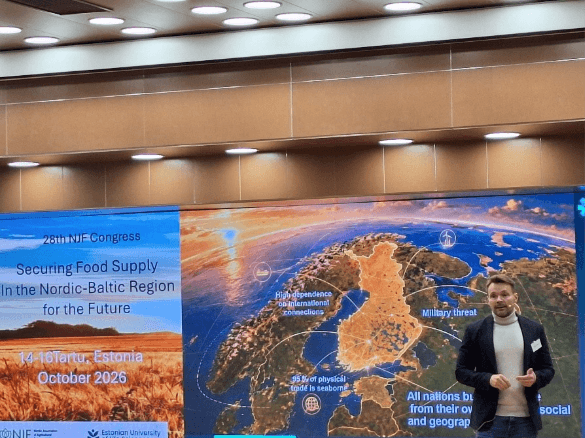
Preparedness Specialist Jukka Peltola from Finland’s National Emergency Supply Agency (NESA) delivered the keynote on food supply security and crisis preparedness. Finland’s strategic grain reserves correspond to approximately nine months of normal consumption.
Turning nutrients into valuable resources
Circular nutrient recycling can reduce dependence on mineral fertilisers while strengthening regional resource security. Projects such as Circular Nutrient Recycling in the Baltic Sea Region (CiNURGi) and FERTITEC are investigating how manure, sewage sludge, biowaste, industrial residues and wastewater-derived products can be transformed into safe and effective recycled fertilisers.
CiNURGi field trials in Estonia, Poland, Sweden and Germany demonstrate the potential of recycled fertilisers to support crop production. Their performance, however, depends on nutrient availability, soil conditions and crop requirements. FERTITEC results suggest that concentrated, standardised recovered fertilisers may be better suited to wider markets, while bulkier organic products are often more appropriate for local and regional nutrient cycles.
Food industry side streams offer another promising resource. The Horizon Europe-funded DeliSoil project (2023–2027) is developing technologies to transform food processing residues into fertilisers and soil improvers. Recycling organic matter and nutrients in this way can improve soil health while reducing greenhouse gas emissions and nutrient losses.
Understanding and improving soil health
Soil compaction remains a significant challenge for agricultural productivity. Can deep-rooted cover crops improve soil structure?
Preliminary results from Norway’s Horti2Future project show that compaction increases soil bulk density while reducing pore volume, water-holding capacity and plant biomass. Cover crops also showed reduced production and had only limited capacity to alleviate compaction during the first season. These findings underline the importance of preventing compaction and developing long-term soil management strategies.
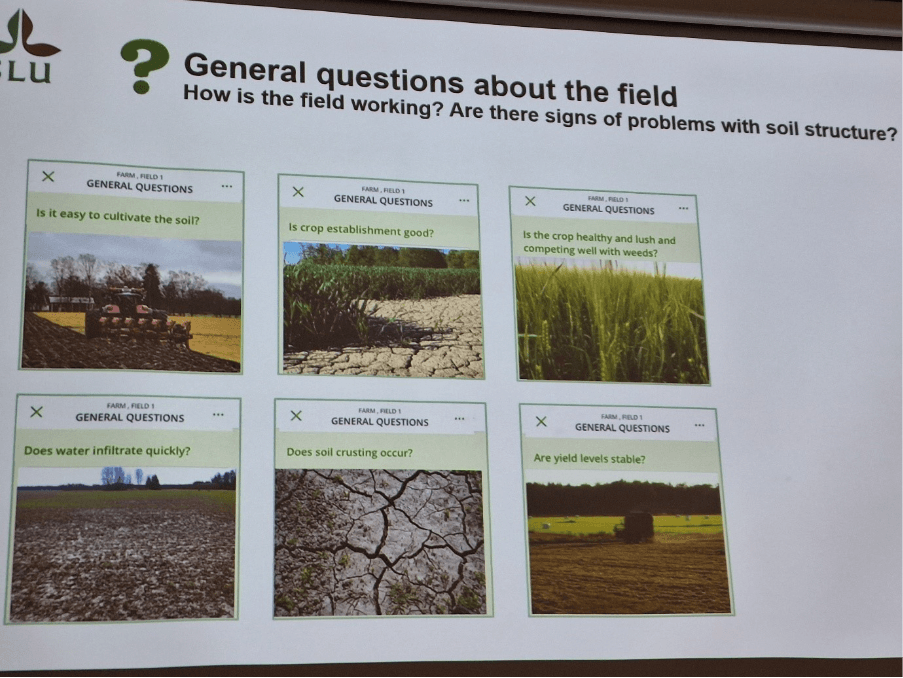
Digital tools, such as the How Healthy Is My Soil? app, can help farmers assess soil conditions and make more informed decisions about soil care. The free tool was developed through collaboration between the Swedish Board of Agriculture and the Swedish University of Agricultural Sciences. It was presented at the congress by Anna Bjuréus from the Swedish Board of Agriculture.
Supporting farmers in the transition in Latvia
The transition towards climate-neutral agriculture requires effective collaboration between farmers, scientists and policymakers. Arnis Lenerts from Latvia University of Life Sciences and Technologies presented research on interactions between these groups.
The findings point to several barriers to implementing climate measures, including complex application procedures, demanding eco-scheme requirements, strict deadlines and administrative burdens. At the same time, farmers recognise the benefits of sustainable practices, including improved soil fertility, reduced resource use and enhanced biodiversity. Simpler requirements, stronger financial incentives and lower risks of sanctions could encourage wider adoption.
Northern lentils from Sweden
Increasing protein self-sufficiency is an important part of food security. Lentil cultivation has been explored in Nordic countries, with some interesting results presented by Fredrik Fogelberg from Research Institutes of Sweden.
Modern lentil varieties typically yield 1,500 to 2,000 kg/ha in Sweden, with top yields reaching 3,500 to 4,000 kg/ha. The Beluga variety, named for its resemblance to Beluga caviar, was a particularly memorable example.
So, what did COVERE² learn from all this?
Research across the Nordic-Baltic region is exploring ways to improve soil health, reduce environmental impacts and strengthen agricultural resilience through better soil management, farmer engagement and circular nutrient solutions.
Promoting regenerative agriculture and demonstrating its practical and economic benefits for farmers are also central to COVERE²’s work. The congress discussions reinforced the importance of solutions that support both environmental goals and farmers’ needs.
Want to discover more about COVERE² activities? Find more articles on our blog.
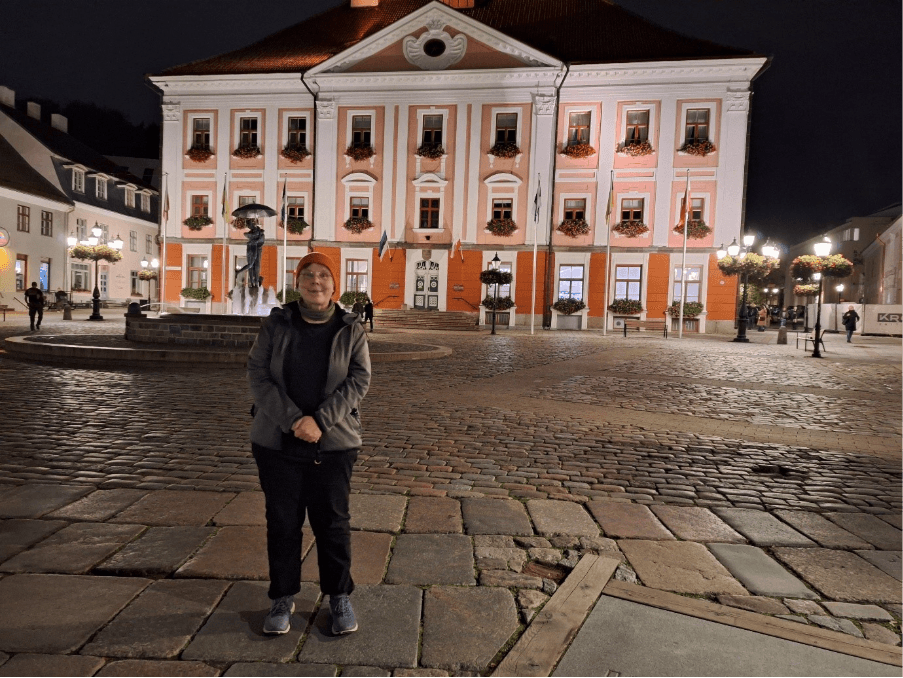
Marja Roitto, University of Helsinki, attended the congress taking place in the city of Tartu, an historic and interesting destination.
Get in touch to discuss your goals with our experts

© 2026 COVERE². Operated by Eleks Holding OÜ, registry code 12995761, Kursi 3, 10415 Tallinn, Estonia. info@covere2.eu