
Financing the Transition: Rethinking Investment for Regenerative Agriculture
Marie-Lou Manca
Sustainability Expert
Published
29 September 2025
The transition to regenerative agriculture requires a fundamental rethink of the financial and risk models that underpin the agri-food system. During recent discussions among banks, insurers, and investors, at the World Agri-Tech Innovation Summit, London, Sept 22–23, 2025, a few points stand out: agriculture is unlike any other sector, capital for regenerative agriculture does exist, but there is no one-size-fits-all solution. It is a sector where cycles are long, adoption is slow, risks are high, and yet the potential for positive impact on climate, food security, and rural livelihoods is enormous.
The Challenge: Long Timelines, Complex Risks
Unlike technology sectors, where rapid scaling and quick returns dominate, agricultural investment unfolds over decades. A farm transition can take 5–7 years to show results, while systemic changes in land use or animal systems may take as long as 50 years. For investors accustomed to short cycles, this creates a misalignment of expectations. On top of this, agriculture faces multiple risks:
- Climate change is reshaping yields and reliability, with especially flooding and precipitation projected to drastically increase. In Europe, flooding and precipitation already account for around 3% of crop losses, a figure expected to double in the coming years.
- Geopolitical tensions have weaponized food as a tool of power, amplifying volatility.
- Structural imbalances across the food value chain mean that innovation often struggles to secure financing unless it satisfies those who already control capital.
Banks: Supporting Systemic Transition
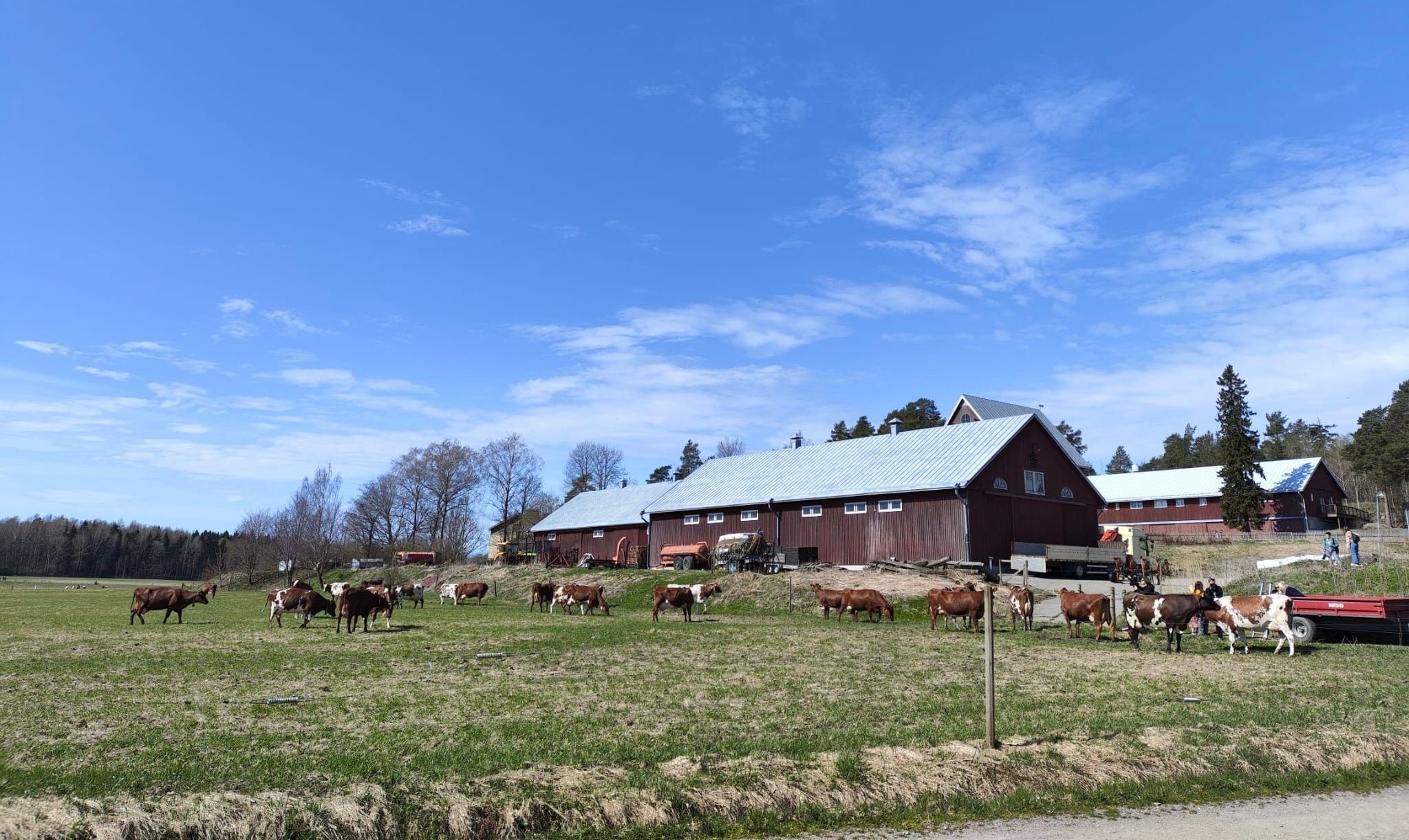
From a banking perspective, financing regenerative agriculture is not as simple as offering a green loan for solar panels. Farming is a system, and supporting a farm’s transition requires financing for crop diversification, feed changes, and new management practices. The Bank of Ireland highlighted both the growing interest from boards and investors in sustainability products, and the increasing demand for proof of impact. For them, it is important to present the full story of agriculture, not only food production, but also energy transition and carbon farming. Their model includes offering lower interest rates to customers engaged in transition. With a target of €50M by 2025, this initiative costs the bank about €1M in rate discounts, seen as an investment in their agri portfolio. The return comes in the short term, through a “green branded” offer. At Rabobank in the Netherlands, farmers are ranked against nine sustainability KPIs, covering areas such as carbon, protein balance, and animal welfare. These are a mix of outcome-based and action-based metrics. Data tracking is relatively straightforward, as farmers already collect much of it for EU subsidies or invoices. The top 20% of farms not only perform better from a business perspective but also gain access to cheaper loans and premium prices. From Rabobank’s experience, there is a clear correlation between sustainability performance and financial performance. This creates a win-win: premium pricing, better access to finance, and reduced risk for investors.
Insurers: Turning Data into Trust
Insurance providers like AXA Climate see their role not only in managing catastrophic events but also in partnering with farmers through the transition. Farmers, however, consistently ask: “What’s in it for us?”
The answer lies in building trust and transparency. Insurance must be a partnership, identifying where risks are and where value can be created. Yet this is not straightforward: data sources are vast but fragmented. Agencies and open-source platforms, increasingly supported by AI, are helping translate this complexity into insights that all stakeholders can use.
The potential is significant: better climate risk assessment, smarter agricultural practices, and insurance products linked to farm revenues rather than input costs. Margin-based insurance could become a future stream, directly connecting climate risk management to farmer income.
Importantly, solutions must be seamless. A decade ago, farmers were asked to provide endless data; today, they expect insurers and tech providers to manage the complexity behind the scenes.
Investors: Seeking Scalable, Acquirable Solutions
For private investors, the greatest frustration is time. Scaling agri-food innovations requires years of pilots and gradual adoption before markets are ready. Few venture capital models are designed to handle this. As one investor explained: “We can’t make one acquisition and then slowly build out the puzzle, it’s too time-consuming.” What attracts capital are solutions that are modular, easy to integrate, and capable of demonstrating ROI quickly. But this leaves a gap: the truly transformative, system-changing innovations often fall outside the current appetite for risk and investment timelines.
What Works: Data, Incentives, and Partnerships
Despite different perspectives, three common threads emerged across stakeholders:
- Data as a bridge: For banks, insurers, and investors alike, robust metrics reduce uncertainty, validate outcomes, and build trust.
- Aligned incentives: Loan discounts for high-performing farms and/or premium prices for verified sustainability
- Partnerships over silos: No single actor can manage or finance this transition alone. Banks, insurers, corporates, and farmers need to share data, risks, and responsibilities.
Where the Future Lies
The future of financing regenerative agriculture is not about squeezing farms into outdated investment models. It is about reshaping capital flows to reflect the realities of farming systems and the urgency of climate adaptation. Looking ahead, expect to see: • Expansion of climate risk management tools, from AI-driven data platforms to margin-based insurance. Digital twins and AI will help integrate datasets into farmer-relevant insights, but adoption will depend on making tools seamless. • Two parallel approaches to climate risk: managing unpredictable, disruptive events, and adapting to the more predictable climate change impacts. • Broader adoption of outcome-based finance, where interest rates, premiums, or returns are tied to measurable sustainability outcomes • Solutions that minimize farmer inputs, making participation simple and intuitive. • Greater collaboration between financial institutions and the agri-food value chain, creating shared models of risk and reward.
Climate adaptation is already a strong driver for farmers, yet 87% feel unsupported in the transition. To unlock the full potential of regenerative agriculture, finance must not just follow but actively enable system change. That means long-term thinking, smarter risk-sharing, and capital models designed not just for profit, but for resilience.
Get in touch to discuss your goals with our experts

©2026 COVERE², All rights reserved