
ELEKS’ Journey Through Double Materiality and ESRS Alignment
Marie-Lou Manca, Valeriya Verveda and Lyubomyr Matsekh-Ukrayinskyy
Sustainability Expert
Published
25 June 2025
Key results
Enhanced stakeholder understanding of sustainability through collaborative engagement
Strengthened ESRS expertise and foundation for future reporting
Summary
To prepare for the EU’s Corporate Sustainability Reporting Directive (CSRD), ELEKS conducted a Double Materiality Assessment (DMA) to evaluate its ESG impacts and related financial risks and opportunities. The process followed a structured, stakeholder-driven approach aligned with the European Sustainability Reporting Standards (ESRS). The outcome was a comprehensive report identifying material topics and data gaps, serving as the basis for ELEKS’ 2024 pilot sustainability report and a key milestone toward long-term CSRD compliance.
Situation
Beginning in 2025, ELEKS will fall under CSRD requirements through its parent company. To proactively prepare, the Sustainability Team launched a DMA to:
- Conducting an Impacts, Risks, and Opportunities (IRO) analysis for our business
- Determining which ESRS metrics are relevant for ELEKS
- Reviewing available data and existing documentation
- Identifying gaps in policies and targets
- Informing the development of a transformation roadmap to enhance alignment with ESRS standards
- Providing internal stakeholders with a clear picture of the ESG landscape at ELEKS
The assessment aimed to provide internal stakeholders with a clear understanding of ELEKS’ ESG landscape and inform a transformation roadmap.

The solution
The DMA reviewed over 800 ESRS disclosure requirements across general, environmental, social, and governance topics. ELEKS applied a collaborative, iterative process rooted in stakeholder theory and sustainability governance best practices.
Stakeholders were engaged through workshops, individual evaluations, and team discussions. The core team managed preparation and synthesis to ensure efficiency and consistency. Teams reached consensus through dialogue, building shared understanding across ESG domains.
Materiality Analysis
A structured methodology was used to assess each topic for impact materiality (severity and likelihood of ESG impacts) and financial materiality (economic significance and probability). This dual lens helped prioritize sustainability topics and supported transparent, balanced decision-making.
The process concluded with a materiality report outlining key ESG priorities and recommendations to strengthen ESRS alignment.
The Result
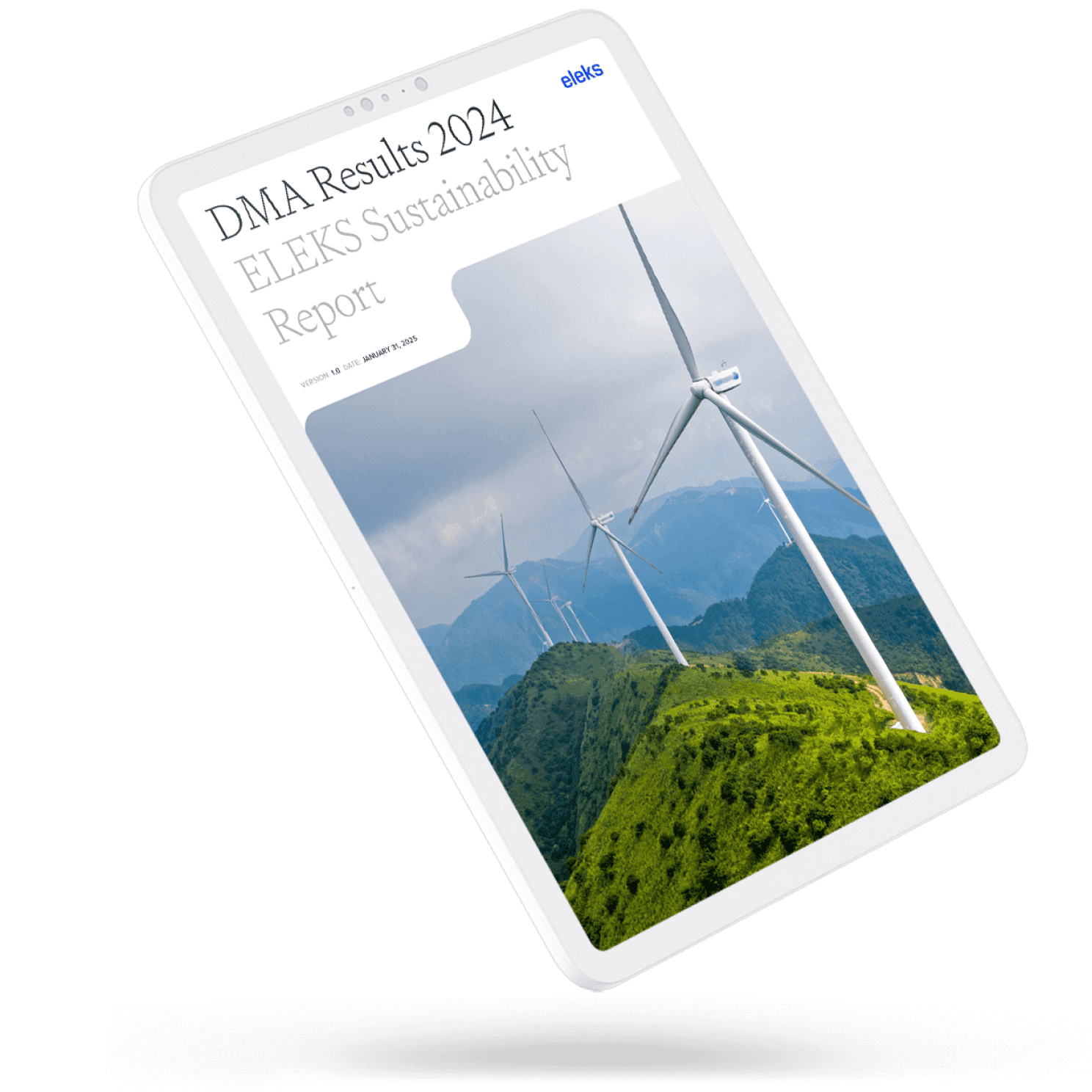
Following the DMA, ELEKS created its first pilot ESRS-aligned sustainability report for the 2024 reporting year. This phase focused on data consistency and quality and served as a test run ahead of formal reporting in 2025.
The experience deepened stakeholder engagement, built cross-functional collaboration, and enhanced internal ESG capabilities. By managing the process internally, ELEKS reinforced its commitment to transparency, resilience, and long-term sustainability integration.
Discover the full case study
Ready to see what we can do for you?
Get in touch to discuss your goals with our experts

©2026 COVERE², All rights reserved