
Between Digital Excitement and the Sustainability Imperative at Food Hotel Tech 2026
Marie-Lou Manca
Sustainability Expert
Published
20 April 2026
A two-day immersion in the tech & sustainability ecosystem of the HoReCa sector, Paris Expo, Porte de Versailles, 14–15 April 2026.
The hospitality and foodservice sector is living through a paradoxical moment. On one hand, tourism dynamics are strong: +9% in 2025, spending holding up during holidays, and business travel picking up again at the start of 2026. On the other, growing regulatory, environmental and societal pressure is forcing operators to reinvent themselves -often without a clear sense of the benefit.
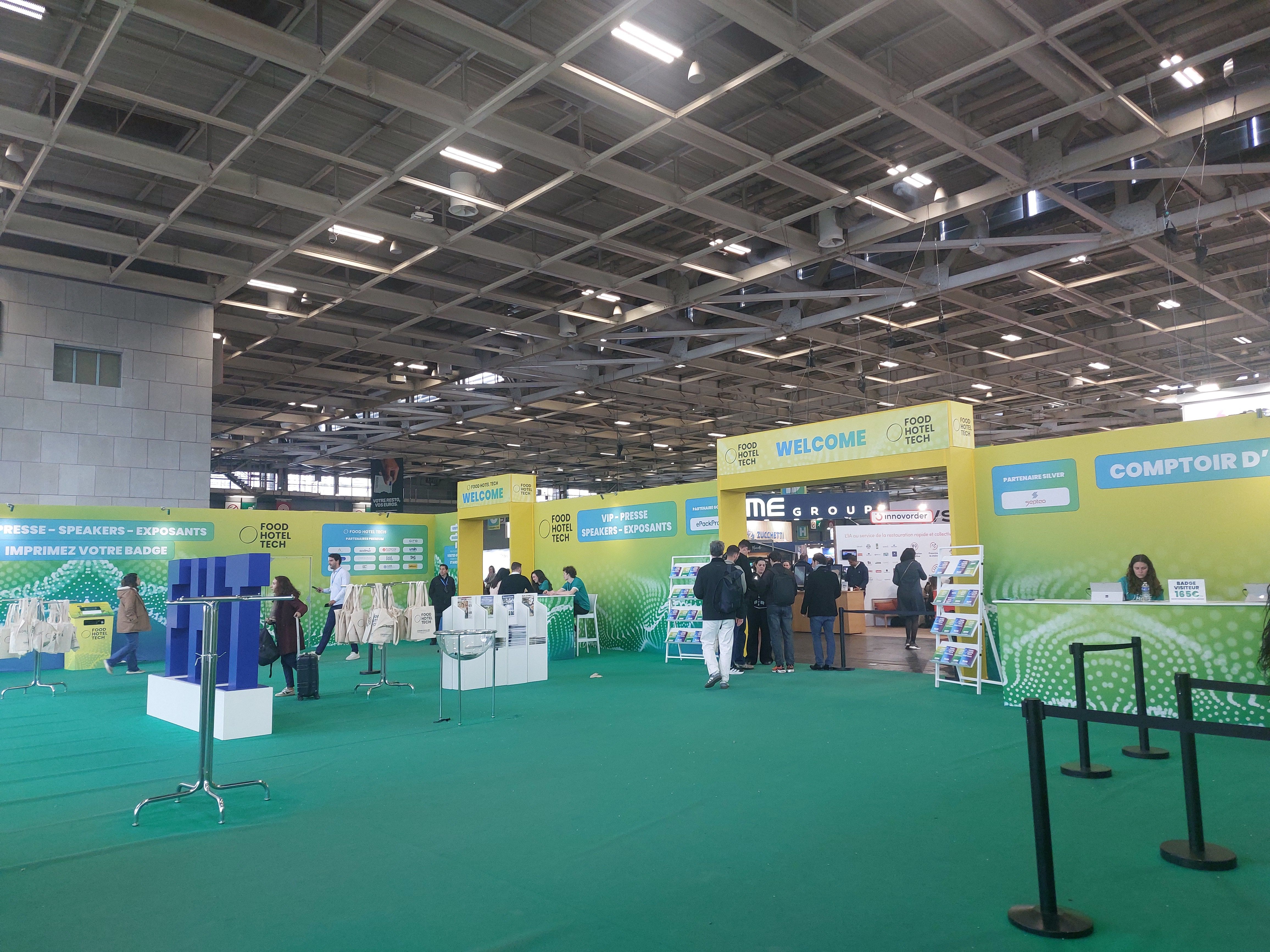
It was in this context that Food Hotel Tech 2026 took place, the leading trade show dedicated to the digital and sustainable transformation of the HoReCa sector. Two days of meetings, pitches, and debates, and a few wake-up calls worth sharing here.
The HoReCa Sustainability Agenda: Seven Priorities, One Imperative
Before talking about solutions, we need to name the problems. The HoReCa sector faces a constellation of ESG challenges that can no longer be treated in isolation.
Data standardisation and collection is perhaps the most fundamental of all. Without reliable, structured data, there is no way to measure, manage, or report. Yet systems remain fragmented, silos are numerous, and data collection is still too often done manually.
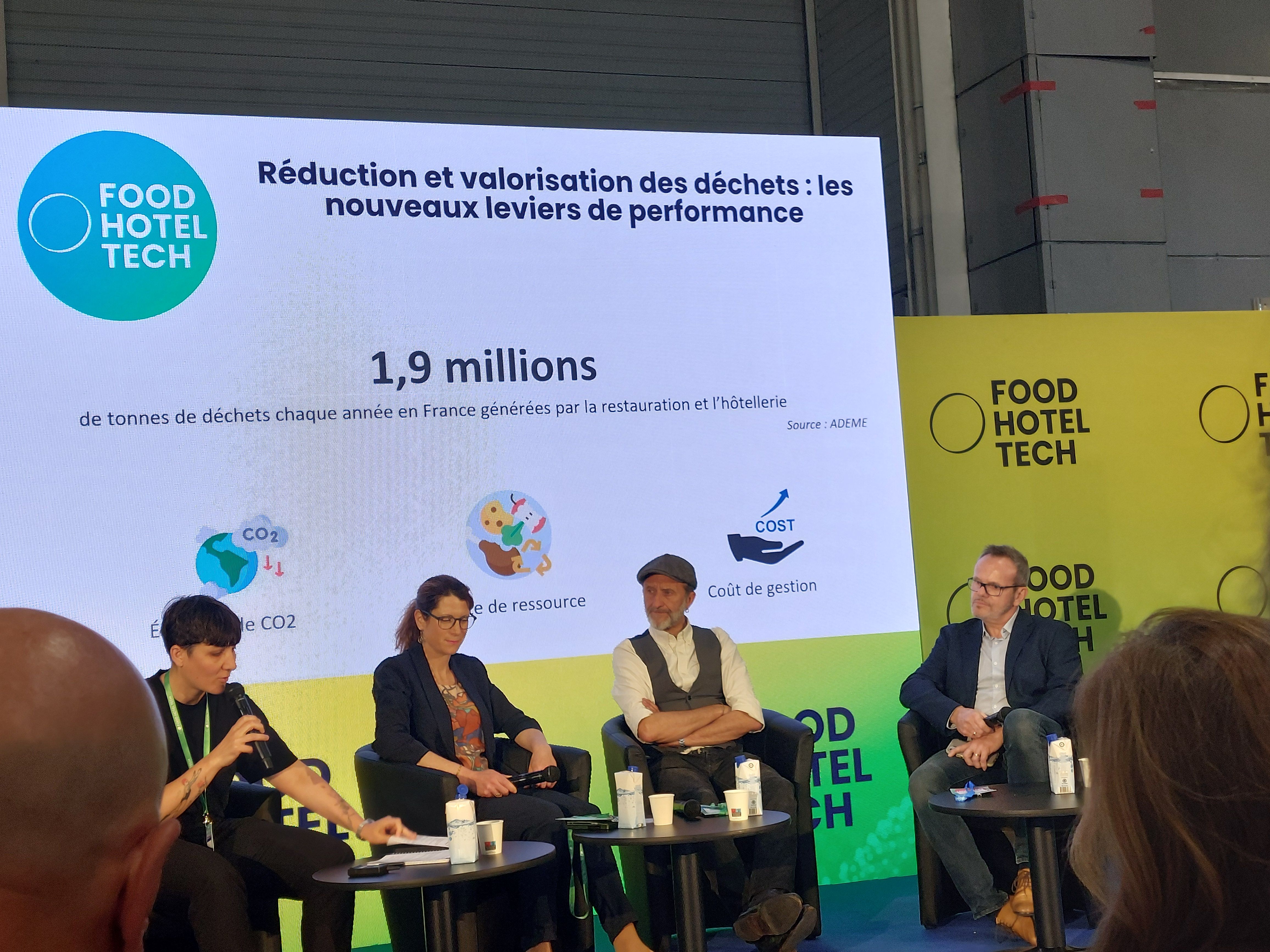
Waste management is the second unavoidable challenge. Tightening regulations on organic waste, including fines and even prison sentences for serious violations, though enforcement remains rare at this stage, require greater traceability. But beyond compliance, waste reduction is a significant source of savings: food waste represents a considerable hidden cost, and reducing it directly improves margins.
Carbon footprint and Scope 3 remain a blind spot for many operators. F&B accounts for 17% of a hotel's carbon footprint, and the majority of emissions lie upstream, with suppliers and throughout supply chains. Consolidating this data, making it auditable, and embedding it in a genuine reduction strategy is a deep piece of work that few have yet undertaken.
Local sourcing is both a carbon response and a market demand. Working with local producers reduces logistics emissions, supports local economies, and meets growing client expectations. But it requires structured partnerships and measurable impact.
Talent retention is an often underestimated ESG challenge in hospitality -a sector historically marked by high turnover. Certification processes, environmental commitments, and the pride of belonging to an organisation that "does the right thing" are real drivers of staff attraction and loyalty.
Governance is also reshaping the traditional top-down management model. Partnerships with local businesses, internal ESG ambassador committees, new forms of stakeholder dialogue: the most advanced hotels are reinventing how they operate, not just how they consume.
Finally, labels and certifications play the role of benchmark and accelerator. Clé Verte, ISO 50001, EU Ecolabel… They are complementary, evolving, and keep pushing establishments to improve continuously. Their value is not only external (client communication), it is internal: they structure the approach, set concrete targets, and recognise the teams that commit to them.
These seven dimensions form a system. Progress on one is unsustainable without addressing the others. And it is precisely this systemic complexity that makes the subject so hard to grasp.
A Market Flooded with Digital Solutions… but Not Always Convincing
The first impression walking the aisles? An abundance of digital solutions. Connected waste management, remote energy monitoring, environmental labelling, traceability platforms, F&B demand forecasting tools… innovation is everywhere.
Among the standout technologies: connected waste bins (Orbisk, Klikéo) capable of weighing and scanning waste to refine purchasing orders; Building Management System (BMS) solutions like Scorpio or Inyus, enabling remote control of heating, ventilation and hot water, with consumption reductions of up to 40%; and carbon scoring modules integrated into menu management platforms such as You Meal, which includes also Carbon Scoring.
But behind all this technological excitement lies a concrete question: who is buying, and why?
Sustainability: Not a Constraint, an Economic Imperative
This may be the most important takeaway from these two days: sustainability is no longer a virtuous option reserved for the already-convinced. It is fast becoming a profitability imperative.
Accor, Novotel, Mercure -the major hotel groups have understood this, and are fundamentally transforming their F&B approach around three axes. First, sourcing: coffee, chocolate and fish from certified supply chains. Second, food waste reduction, which Sodexo captures in a striking phrase: "the best waste is the waste you never produce." Their West Watch programme achieved a 50% reduction in waste, with a documented ROI. And third, shifting client habits: more plant-based dishes, "plant forward" initiatives, and Mercure's "roots to leaves" recipe contest.
F&B accounts for 17% of a hotel's carbon footprint. That is not a footnote, it is a direct lever for reducing material costs. Less waste means buying less, storing less, and discarding less. Which means better margins.
Viewed through this lens, ESG is not a burden -it is a structural cost reduction. Sodexo moved from 34g to 26g of waste per meal per person within a few months, thanks to technology and team engagement. Multiply that across thousands of covers, and the gain is substantial.
Engaging Without Imposing: The Art of Making Sustainability Desirable
There is something essential in the posture of the most advanced operators: they do not pitch sustainability as a restriction. They make it desirable.
This is especially true in leisure hospitality. Guests are on holiday, they are not there to be lectured. Showing them that their stay helped support a farm 20km away, that their meal uses seasonal, natural ingredients, that the hotel reduced its energy bill to reinvest in the guest experience: these are messages that land. Novotel has translated this into its "longevité everyday" concept, highlighting small daily actions. The idea: show, don't preach.
To engage teams, regulation is not enough. What works is the pride of doing good work, client satisfaction, and the impact on margins and bonuses. ESG as an economic imperative, not as regulatory punishment.
AI, Data, and the Missing Link
There is a palpable tension in conversations: everyone wants data, and no one wants to pay to collect it. Waste management platforms photograph bins, BMS systems stream live consumption curves, POS tools anticipate volumes to adjust orders. The data exists. But it is often siloed, underutilised, and rarely turned into decisions.
AI is emerging, for supplier recommendations, purchasing forecasts, real-time portion adjustments. Some solutions even factor in weather and calendar events (a football match, a conference, a public holiday) to fine-tune stock orders. That is promising. But the maturity of players is uneven, and the challenge of integrating systems (PMS, POS, ERP, ESG tools) remains a central operational challenge.
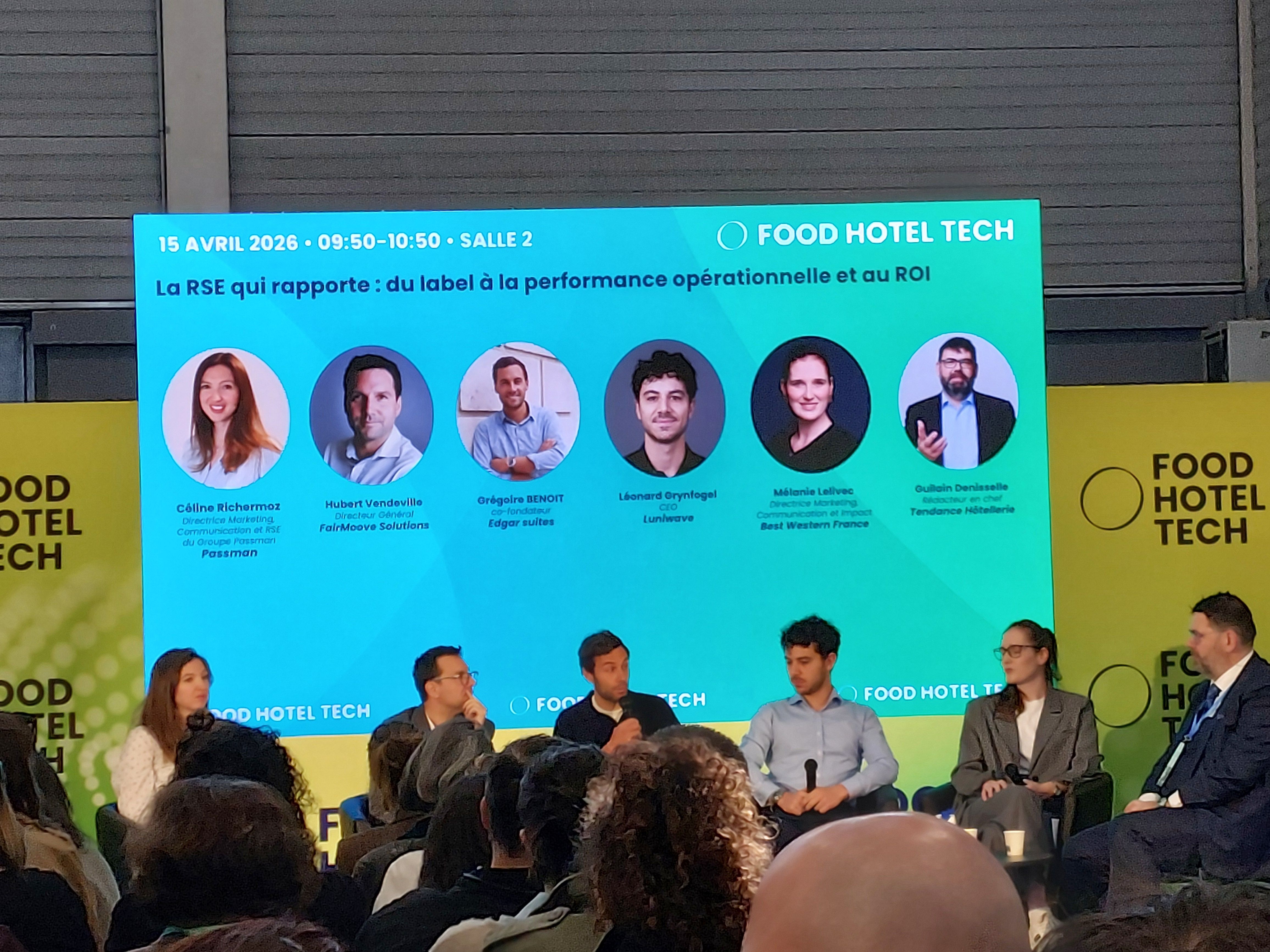
On certification and environmental labelling, players like Fairmoove are developing readable labels, on the model of the Nutri-Score, to make hotels' carbon performance visible and comparable. Audited by third parties such as E&Y from September 2026, using ADEME methodology, they allow establishments to benchmark against the industry.
Five Key Takeaways
A wealth of digital solutions, very few truly focused on sustainability. Tech is everywhere — waste management, BMS, F&B forecasting, AI for stock. But the building blocks specifically oriented towards ESG remain a minority, often peripheral. Sustainability is still a blind spot in the majority of offerings.
ESG requires an "ecosystem of solutions" -today, and that is a problem. No single tool, no single platform. It is a chain: measure, reduce, offset, report, certify. This fragmentation is precisely what slows decision-making, and what makes structured guidance so valuable.
AI, once again the star of the show. Concrete use cases are emerging: purchasing recommendations, demand forecasting, real-time portion adjustments. The potential is real. But enthusiasm must remain grounded -operator maturity is still highly variable.
Data quality remains a blind spot. Many environmental indicators are neither audited nor certified by third parties. In a context of CSRD reporting and rising investor expectations, this is a seriously underestimated risk.
B2B is clearly ahead of B2C on sustainability. Business travellers, procurement teams, investment funds, they are the ones driving demand. Individual consumers are following, but slowly. And the peer exchanges over these two days were by far the richest source of insight: concrete, unfiltered, invaluable.
And one conviction that keeps growing stronger: we need to connect the dots. Between data and decisions. Between tools and strategies. Between compliance and performance. That is where the real transformation happens.
What This Tells Us About How to Position Sustainability
One observation, by way of conclusion: selling sustainability as a response to regulation is not enough. That is not how operational decision-makers make choices. They weigh costs, operational constraints, and client experience priorities.
The right angle is this: "how can we help you lower costs, retain your teams, and better respond to your clients' changing expectations -with sustainability as the mechanism, not the end goal?"
Peer exchanges are invaluable. Certifications provide a framework, create challenge, and recognise effort. Connected technologies are genuinely changing the game on waste and energy. And demand exists -business travellers are increasingly sensitive to it, so are investors, and younger guests are starting to factor it into their reviews.
The HoReCa sector is at a turning point. The tools are there. What is still sometimes missing is the ability to connect the dots: between data, decisions, and outcomes. That is where the real transformation takes place.
This is precisely the challenge of coherence we address at ELEKS with two complementary offerings. COVERE² is our sustainability platform, designed to structure data collection across all ESG pillars, including Scope 3, and produce audit-ready reporting tailored to your operations. The goal is not to add another layer of complexity, but to structure sustainability transformation around what matters the most to your operations (energy, waste, procurement, HR) and turn it into an operational management tool. PATH2CC, on the other hand, enables hotels and restaurants to go further on carbon offsetting by purchasing verified credits from local agricultural producers, with genuine traceability and an authentic story to share with clients. Together, these two solutions cover the full chain: measure, reduce, offset, and demonstrate.
Article written from field observations at Food Hotel Tech 2026 and conversations with sector stakeholders. Views expressed reflect our market analysis at the time of writing.
Get in touch to discuss your goals with our experts

©2026 COVERE², All rights reserved